
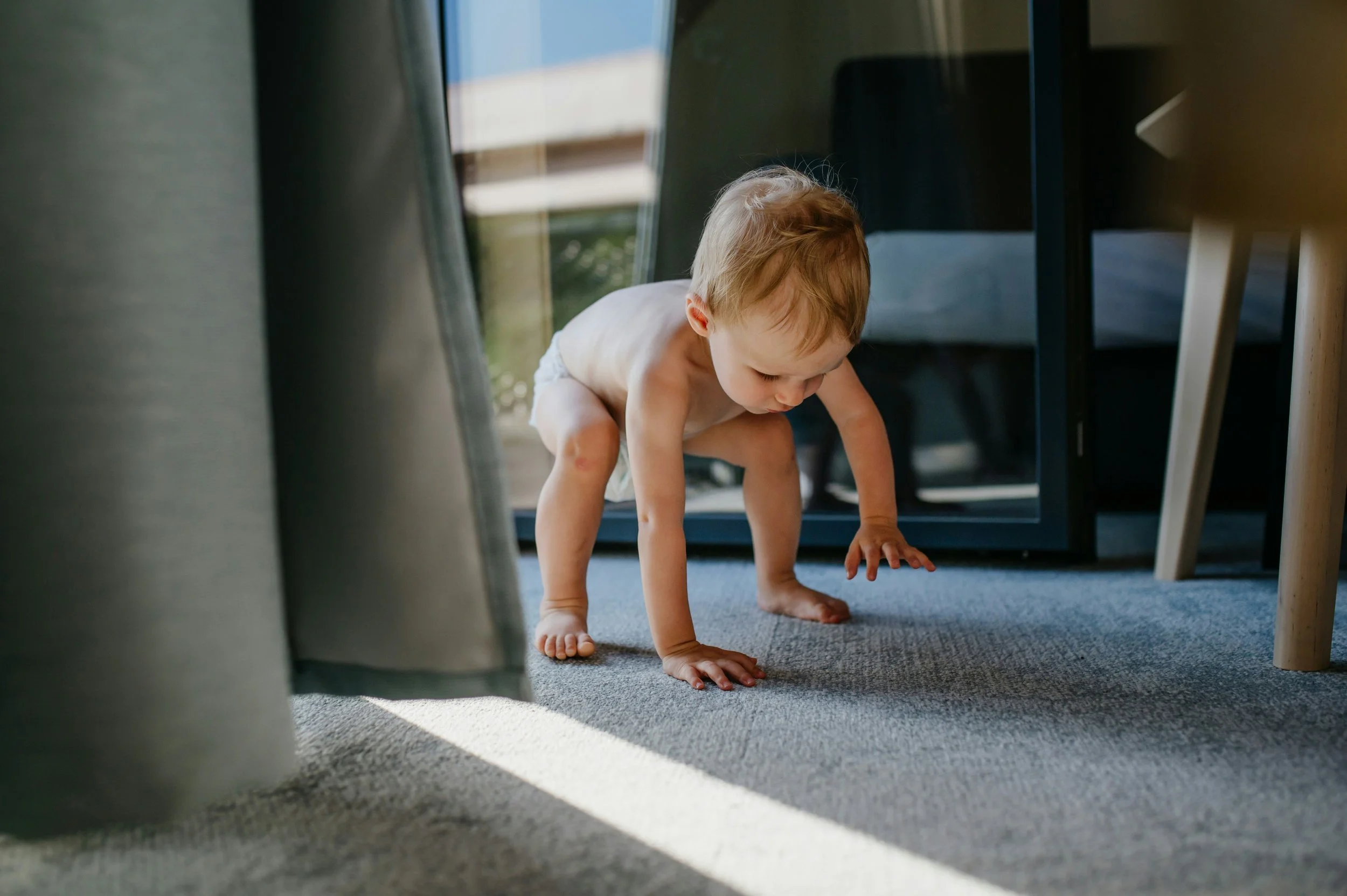
Watching your baby take their first steps is one of the most exciting moments of early development. It often feels like it happens overnight, but walking is actually the result of months of gradual progress, strength-building, and coordination.
For parents, it’s natural to wonder what’s typical, what’s delayed, and when it might be time to look a little closer. Understanding walking milestones can help you feel more confident as your child moves through this stage of development.
When Do Babies Usually Start Walking?
Most babies begin walking independently somewhere between 9 and 18 months. That’s a wide range, and it’s completely normal.
Before those first steps happen, your baby is building a foundation through earlier movement milestones. If you’ve been following your child’s development closely, you’ve likely already seen progress in rolling, sitting, crawling, and pulling to stand. These all play a role in preparing the body for walking.
If you want a broader look at how these early stages connect, you can explore our comprehensive guide to baby development milestones.
What Happens Before Walking Begins
Walking doesn’t start suddenly. It builds in stages.
Pulling to Stand
Around 8 to 10 months, many babies begin pulling themselves up using furniture, toys, or caregivers for support.
Cruising
Once standing feels more stable, babies often begin “cruising” along furniture. This helps them practice shifting weight from one leg to the other.
First Independent Steps
Eventually, your baby may take a few unsteady steps without support. These early steps are often wide, wobbly, and short, but they mark a big transition.
Many of these milestones are first introduced during infancy. If you want to see how these skills develop earlier on, take a look at infant developmental milestones from 3 to 12 months.
What If My Baby Skips Crawling?
Some babies move straight to standing and walking without spending much time crawling.
While this can happen, crawling plays an important role in developing coordination, strength, and left-to-right brain balance and connection. If your baby is not crawling or shows unusual movement patterns, it may be helpful to learn more about how crawling fits into development.
You can read more about this in our guide to baby crawling milestones and asymmetry.
Signs Your Baby Is Getting Ready to Walk
Every child develops at their own pace, but there are some common signs that walking may be just around the corner:
Standing independently for a few seconds
Letting go of furniture or support
Taking assisted steps while holding your hands
Showing increased curiosity about moving across spaces
Squatting down and standing back up without help
These signs usually appear in the months leading up to independent walking.
When Should Parents Be Concerned About Walking Delays?
Because the range for walking is so broad, timing alone is not always the best indicator of a concern. Instead, it’s helpful to look at overall movement patterns and progression.
You may want to take a closer look if your child:
Is not attempting to stand by around 12 months
Is not walking independently by 18 months
Shows a strong preference for one side of the body
Drags one leg or seems unbalanced while moving
Avoids weight-bearing on their legs
Delays don’t always mean something is wrong, but they can be a signal that additional support may be helpful.
How Walking Fits Into Overall Development
Walking is not just about mobility. It connects to many other areas of development.
As children begin walking, you may notice changes in:
Confidence and independence
Social interaction and exploration
Communication and curiosity
Coordination and body awareness
These patterns continue to build into toddlerhood and beyond. If you want to see how development progresses after walking becomes more established, you can explore toddler developmental milestones from 1 to 3 years.
Supporting Your Baby’s Walking Development
There are simple ways to support your child as they learn to walk:
Give them plenty of safe floor time to explore
Encourage movement rather than prolonged time in containers
Allow barefoot time indoors to help with balance and coordination
Create opportunities for reaching, pulling, and cruising
Be patient and avoid rushing the process
Development happens best when children are given space to explore and build confidence at their own pace.
Signs To Watch Out For
Sometimes kids’ legs can do odd things like change from bow-legged to knock-kneed while they are new to walking. Parents often want to know what is normal and what isn’t.
A few things to watch for when kids start walking that might indicate they need help:
Leading with one hip
Dragging a foot
Butt moving to one side more than the other
Asymmetrical gait
Tripping on one foot
Bowel movement change/infrequent
Not wanting to fully weight bear on a leg when putting them down
A little more clumsy or struggling to maintain balance
A Natural Progression, Not a Race
It’s easy to compare milestones between children, but walking is not a race. Some babies walk early, some later, and both can be completely normal.
What matters most is how your child is progressing over time.
If you ever feel unsure about your child’s development, it’s always okay to ask questions and seek guidance. Understanding milestones gives you a clearer picture of what to expect, but your child’s unique path is what matters most.
Supporting Healthy Movement From the Start
Walking is just one step in a much bigger developmental journey. From the earliest newborn reflexes to the independence of toddlerhood, each stage builds on the last.
If you’d like to better understand how movement, coordination, and early development connect, or if you have questions about your child’s progress, our team at Cameron Family Chiropractic in Calgary is here to help.
Contact us today to learn more about how we support growing families through every stage of development.