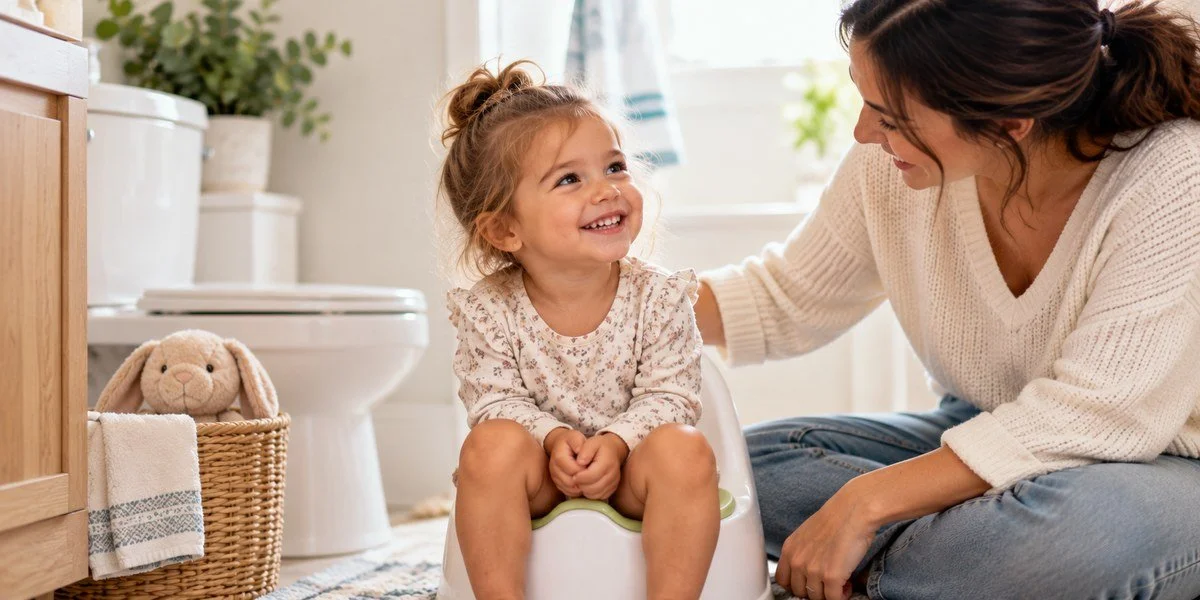
Potty training is a big milestone, and for many parents, it can feel like a confusing one.
There’s often pressure around timing, but the truth is that potty training works best when it’s based on readiness rather than age alone. Every child develops at their own pace, and recognizing the right signs can make the process smoother and less stressful for everyone.
Understanding what to look for can help you approach potty training with more confidence and fewer frustrations.
If you’re looking for a broader view of how development progresses over time, you can explore our complete guide to baby development milestones.
Why Readiness Matters More Than Age
While many children begin potty training between 18 months and 3 years, readiness is not tied to a specific age.
Starting too early can lead to:
Frustration for both parent and child
Resistance or lack of interest
Longer overall training time
Waiting until your child shows signs of readiness often leads to a more positive and efficient experience.
Since potty training relies on coordination, awareness, and nervous system development, some families choose to support this stage with children’s chiropractic care to help their child feel more in tune with their body.
Physical Signs of Potty Training Readiness
Your child’s body needs to be able to support the process.
Common physical signs include:
Staying dry for longer periods
Showing awareness of a wet or dirty diaper
Having more predictable bowel movements
Being able to sit down and stand up independently
Walking confidently and moving with coordination
Movement and coordination play a role here. You can learn more about how these skills develop in walking milestones and development.
Cognitive and Communication Signs
Understanding and communication are important parts of potty training.
Signs to look for include:
Understanding simple instructions
Being able to communicate needs (with words, sounds, or gestures)
Recognizing the urge to go
Showing interest in routines or imitation
Communication skills develop gradually. You can explore how they build over time in speech milestones from first words to sentences.
Emotional and Behavioral Readiness
Potty training also requires a level of emotional readiness.
Helpful signs include:
Showing interest in using the toilet
Wanting more independence
Being willing to sit on the potty
Tolerating small changes in routine
Demonstrating curiosity about the process
These skills often develop during toddlerhood. You can learn more about this stage in how independence develops during toddler years.
What If My Child Isn’t Showing These Signs Yet?
If your child isn’t showing many of these signs, it may simply mean they’re not ready yet.
That’s completely normal.
Development varies from child to child, and pushing the process too early can create unnecessary stress.
Instead, it can be helpful to:
Give your child more time
Continue supporting overall development
Watch for gradual changes in readiness
If you’re unsure about your child’s development more broadly, you can review developmental red flags by age for additional guidance.
How Potty Training Connects to Overall Development
Potty training is not an isolated milestone. It connects to several areas of development.
It relies on:
Physical coordination and body awareness
Communication and understanding
Emotional readiness and independence
Routine and consistency
These skills are built over time, starting in infancy and continuing through toddlerhood.
For a full picture of how these stages connect, you can explore baby milestones by month and how they progress into later stages.
Supporting Your Child Through Potty Training
Once your child shows signs of readiness, there are simple ways to support the process:
Keep routines consistent
Offer encouragement without pressure
Allow your child to take part in the process
Be patient with accidents and setbacks
Celebrate small successes
Every child approaches this stage differently, and progress may not always be linear.
A Process That Works Best at the Right Time
Potty training is most successful when it aligns with your child’s natural development.
Rather than focusing on when it “should” happen, it’s more helpful to focus on when your child is ready.
This approach helps create a more positive experience and supports long-term success.
Supporting Development at Every Stage
Potty training is just one step in a larger developmental journey, connecting physical, emotional, and communication skills.
If you have questions about your child’s development or want guidance through this stage, our team at Cameron Family Chiropractic is here to help.
Contact us today to learn more about how we support families through every stage of growth.